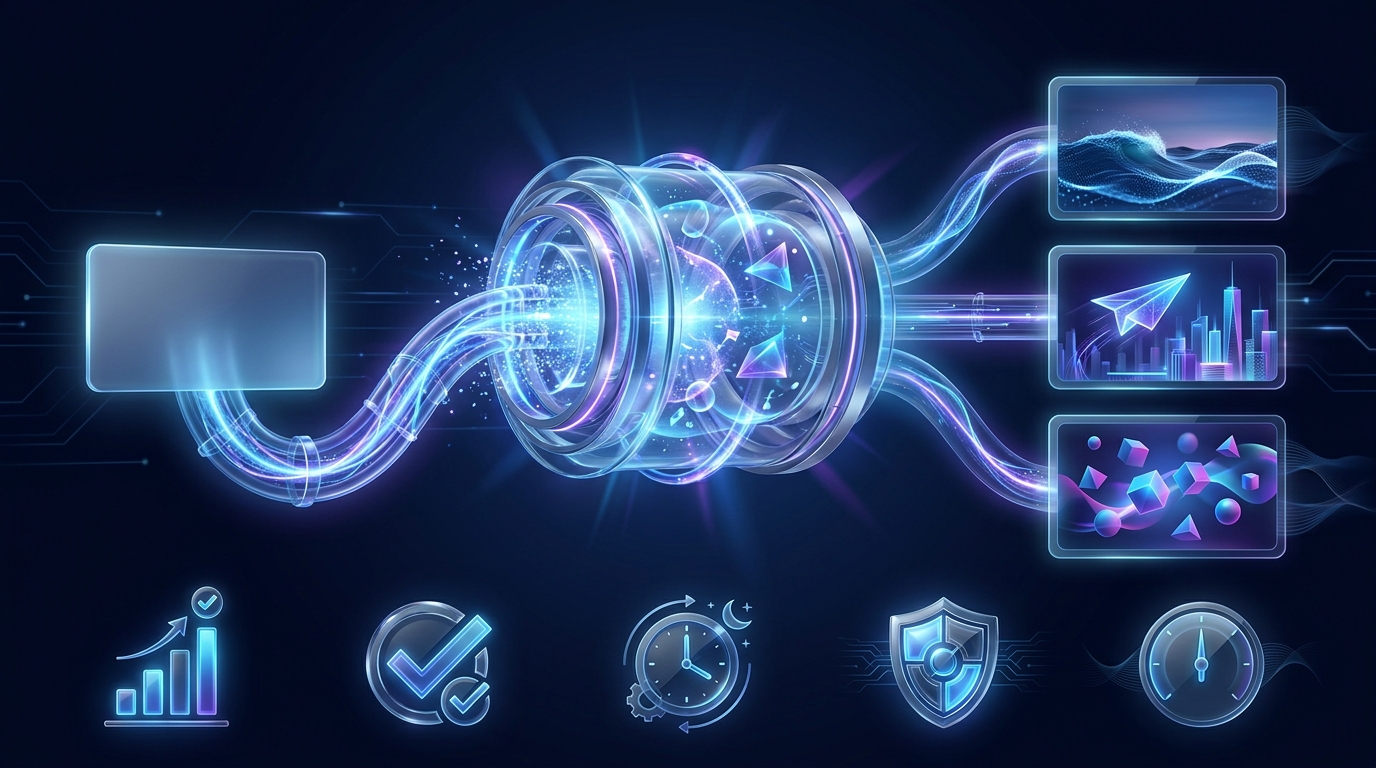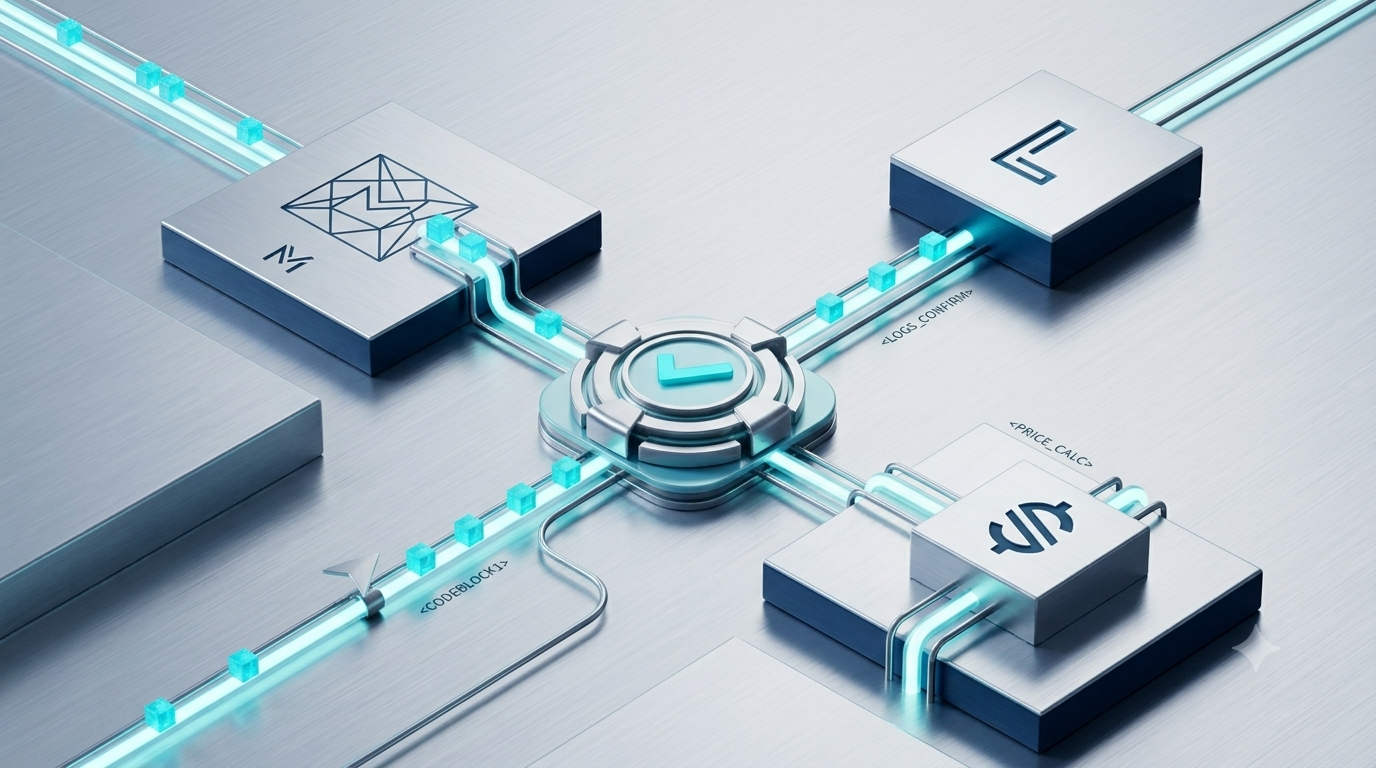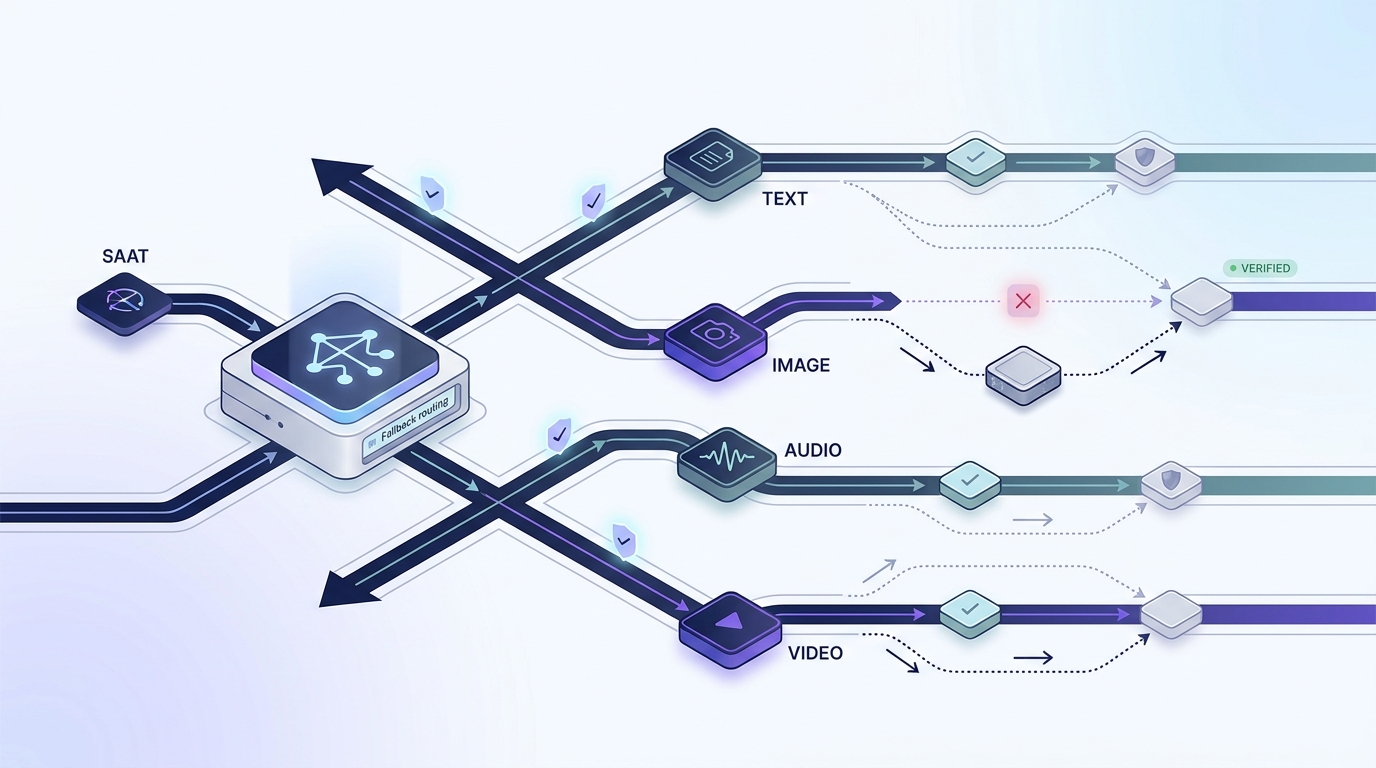
Fallback Routing for LLM APIs: Multimodal Agent Routing for Text, Image, Audio, and Video
If your product only routes text completions, fallback logic is usually simple: retry, switch providers, and keep the schema stable. That breaks down once the same system also handles images, audio, and video.
That is why fallback routing for LLM APIs should be designed as a multimodal routing policy, not a generic retry rule. The text model that is acceptable as a backup for JSON extraction is rarely the right backup for image generation. The audio route that works for transcription is not automatically a safe fallback for speech output. And video is often a separate approval class altogether.
As of Saturday, July 18, 2026, Flatkey's public homepage still positions the product around one key, one router, and hourly-verified official model access across major providers. The live public pricing FAQ still says one balance can route across GPT, Claude, Gemini, DeepSeek, image, audio, and video models. Flatkey's public pricing feed checked on the same date returned text, image, and video-adjacent rows, including gpt-image-2, multiple Gemini image rows, and a Seedance-family video row. That makes the control-plane question more important than the raw model list: how should fallback work when the workload crosses modalities?
Why fallback routing gets harder in multimodal systems
Fallback routing for LLM APIs stops being a provider-switch problem once the output artifact changes.
The core issue is that each modality has a different failure shape:
- Text failures are often recoverable with another model in the same response class.
- Image failures affect style, aspect ratio, fidelity, and brand review.
- Audio failures affect transcription accuracy, latency, or voice quality.
- Video failures usually add the highest cost and the strictest human review path.
That means multimodal agent routing should optimize for four things at once:
- Artifact type
- Verification method
- Latency tolerance
- Safe fallback class
If those are not explicit, the router may technically succeed while the workflow still fails.
Start with route classes, not model names
The safest way to implement fallback routing for LLM APIs is to classify jobs before you compare vendors.
| Workflow class | Primary job | Safe default | Safe fallback rule |
|---|---|---|---|
| Text reasoning | Extraction, classification, structured output, tool use | Text-first model with predictable schema behavior | Fallback to another text route with the same output contract |
| Image generation or editing | New visual assets, edits, creative variants | Image-capable route sized for fidelity and cost | Fallback only to an approved image route with matching aspect and review standards |
| Audio workflows | Transcription, translation, speech output | Audio-aware route chosen for latency or accuracy | Keep transcription and speech fallback rules separate unless both were tested together |
| Video generation | Preview clips, production assets, image-to-video | Video route with explicit queue and approval assumptions | Fallback narrowly; often to a second approved video route or human escalation |
This is the operational heart of multimodal agent routing. One router can still serve all four classes, but the fallback policy should not pretend they are interchangeable.
What to verify before automatic failover
Most teams implement fallback too early. Verification comes first.
For text, verification is often machine-friendly:
- schema validation
- tool-call success
- exact field presence
- cost and latency thresholds
For image, audio, and video, verification is different:
- visual QA and brand review for images
- transcript checks or playback checks for audio
- duration, artifact quality, and approval checks for video
That is why fallback routing for LLM APIs should use verification classes like this:
| Modality | Verification path | Why it matters for fallback |
|---|---|---|
| Text | Schema validation, sampling, automated tests | Safe to auto-fallback when the output contract stays machine-checkable |
| Image | Human review, template QA, style checks | A fallback image route can be technically valid and still brand-incompatible |
| Audio | Transcript review, language checks, playback review | Accuracy and latency often trade off differently across routes |
| Video | Human approval, duration/fidelity checks, queue monitoring | Video failures are expensive enough that fallback should be explicit, not automatic by default |
If you skip verification design, multimodal model routing turns into blind rerouting.
A practical fallback framework for multimodal agent routing
Fallback routing for LLM APIs works better when it answers the following questions in order:
- What is the primary artifact?
- What quality floor is non-negotiable?
- How is this artifact verified?
- Which other route can preserve that standard?
Applied in practice:
- A text extraction job can usually fail over to another text route if the schema, latency, and cost guardrails still hold.
- An image generation job should only fail over to another image route that preserves approved dimensions, review flow, and acceptable output quality.
- An audio transcription route can fail over to another transcript-capable route, but not automatically to speech output just because both are "audio."
- A video generation route should often fail into a narrower backup path or a manual review queue rather than a generic model retry.
The important distinction is this: fallback routing for LLM APIs is not the same as model availability routing. Availability is only one input. The router also needs to understand modality, output expectations, and review cost.
Where Flatkey fits
Flatkey is relevant here because the public product surface is already built around one router instead of one-provider-at-a-time access.
On July 18, 2026, the public site still supported the following review-safe claims:
- one key for multiple model families
- an OpenAI-compatible routing surface
- a pricing FAQ that keeps one balance across text, image, audio, and video models
- a public catalog surface that shows current model coverage across multiple endpoint families
That matters because the routing problem is usually bigger than the API call itself. Teams need one place to review what is available now, what changed, and which routes are appropriate for each workload class. If you want the current public catalog context before you tighten fallback policy, Flatkey's AI model catalog guide is the right reference point, and the live pricing page is the right commercial checkpoint.
A rollout checklist for fallback routing for LLM APIs
Before you ship automatic failover in a multimodal product, confirm these five items:
- Route classes are explicit. Text, image, audio, and video do not share one generic backup rule.
- Verification is defined per modality. A route is only fallback-safe if the output can still be approved.
- Fallback stays inside the artifact class. Text fallback is not image fallback, and image fallback is not video fallback.
- Cost ceilings are part of the policy. The most available backup may be the wrong backup if it breaks spend assumptions.
- Operators can review the routing surface. Engineering should not be the only team that can explain why a job moved to a backup route.
If you can pass all five, your multimodal agent routing policy is probably durable enough for production traffic.
If you want to standardize that control plane instead of hand-managing provider-by-provider fallbacks, review the current pricing page and compare it with the current AI model catalog guide before you lock your next routing revision.
FAQ
What is fallback routing for LLM APIs?
Fallback routing for LLM APIs is the policy that decides what backup route should handle a request when the primary route fails, degrades, or becomes too expensive. In multimodal systems, that policy has to account for artifact type, verification, and review cost, not just provider uptime.
Why is multimodal agent routing harder than text-only routing?
Multimodal agent routing is harder because text, image, audio, and video outputs do not fail in the same way and cannot be verified the same way. A valid text fallback may still be an invalid image or video fallback.
Can one router handle text, image, audio, and video safely?
Yes, but only if the control plane separates route classes and verification classes. One router is useful; one generic fallback rule is usually not.
When should video fallback stay manual?
Video fallback should stay narrow or manual when queue time, fidelity, approval cost, or brand risk are high enough that an automatic backup route could produce an unacceptable asset even if the API call succeeds.
What should teams review before enabling automatic failover?
Review the live model surface, approval rules, cost ceilings, and artifact-level QA path first. That is the difference between reliable fallback routing for LLM APIs and blind retries across incompatible routes.